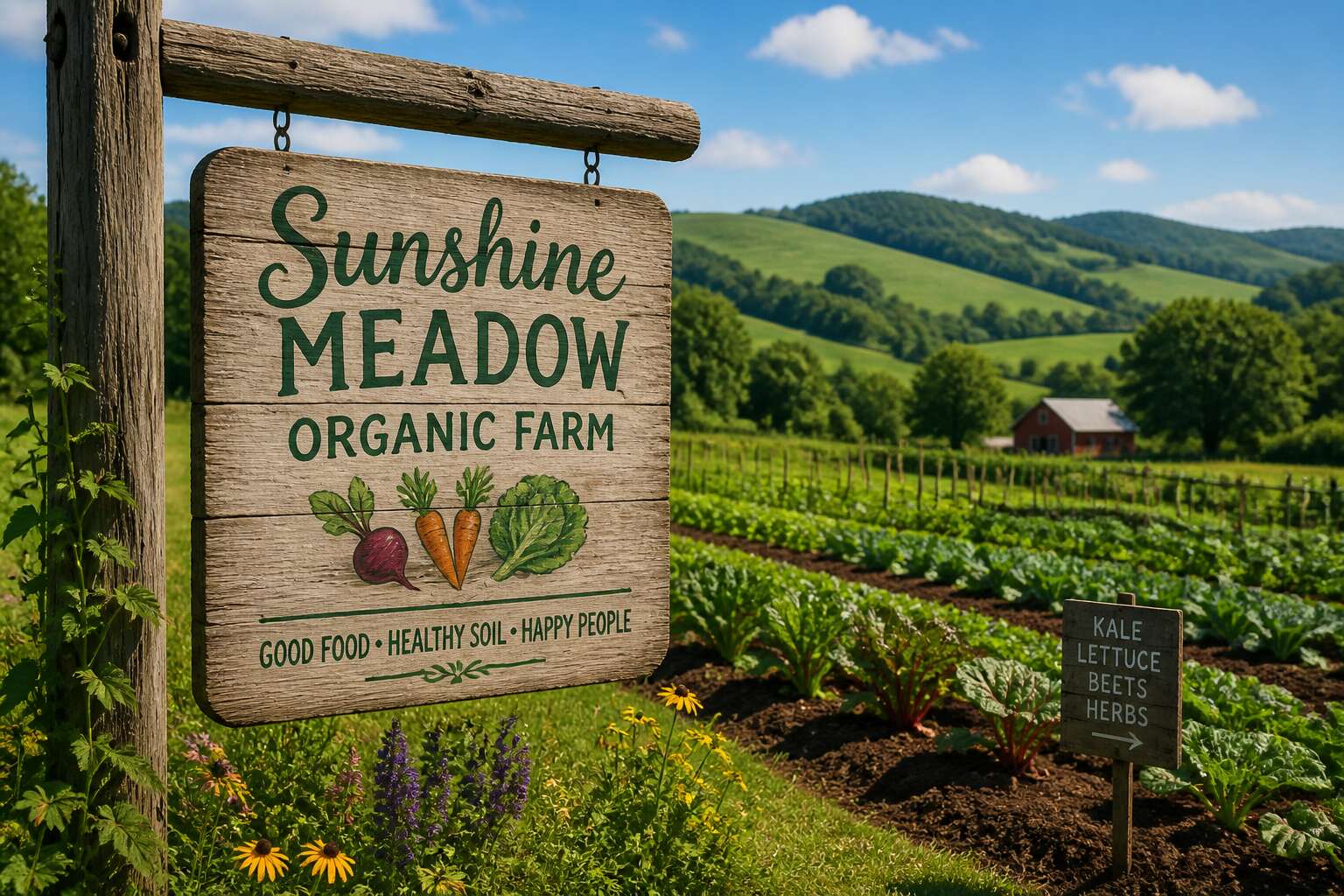
The Importance of a Strong Farm Name
Choosing organic farming names carries weight. A strong name tells your story before a single word of explanation.
Consider what a name must accomplish:
- Signal your commitment to soil health.
- Create immediate recognition at local markets.
- Reflect the unique character of your land.
In South Africa, where diverse languages and landscapes abound, a name that resonates locally sets you apart. I have seen farms thrive simply because their name captured attention.
Types of Organic Farm Names
There is a quiet poetry in naming a farm! It is the first promise you make to the land. In South Africa, where the soil tells stories of drought and abundance, the name you choose carries weight. Some farmers opt for descriptive names like “Kloof Valley Organics.” Others prefer names that evoke a feeling.
Consider the different types of organic farming names:
- Geographic names, rooted in place names.
- Botanical names, celebrating a signature crop.
- Heritage names, honouring family lineage.
- Philosophical names, reflecting a commitment to regeneration.
Each type tells a different story. A geographic name connects you to a patch of earth, while a botanical name hints at the harvest. Heritage names honour generations, and philosophical names speak to the why behind the work. The best organic farming names feel inevitable, already part of the soil.
Brainstorming Techniques for Organic Farm Names
Choosing a name for your land is an act of identity. The right organic farming names surface without effort, embedded in the land itself. Most people try to force this process with a blank page and a deadline. That rarely works. Instead, begin with a constraint. Limit yourself to one noun and one verb. See what appears! Then, push deeper with a few targeted prompts:
- Name the first thing you see at sunrise
- Describe what your farm smells like after rain
- Translate a local plant name into your mother tongue
Each prompt forces your mind to avoid clichés. You stop reaching for vague descriptors and start finding the specific truth of your place. That specificity makes a name durable. It carries memory. It carries weight. And when you say it aloud, you know it belongs.
Evaluating and Refining Your Farm Name
Most names fail quietly. In South Africa, where land is tied to memory, a farm name carries real weight. When I evaluate my own organic farming names, I ask one question. Does it still sound true at dawn, when the mist sits low over the valley?
Refining a name takes courage. The first name I chose was elegant on paper, but impossible to say. My neighbours stumbled over it. Customers forgot it. So I tested it aloud, again and again.
Here is what I learnt to check:
- Can a stranger pronounce it on the first try?
- Does it hint at what you grow, without boxing you in?
- Will it still hold meaning in ten years?
A refined name feels quiet and inevitable. It stops being a label and starts being a place. That is the moment organic farming names become home.
Legal and Practical Considerations for Farm Naming
Naming a farm in South Africa is a legal act, not a marketing whim. Your organic farming names must clear the Companies and Intellectual Property Commission (CIPC) registry, but that is only the first hurdle. The name you choose also carries weight with consumers who trust organic labels. A single conflicting trademark can sink your brand before your first harvest.
Consider your region and language. A name that means “green” in Afrikaans might resonate in the Western Cape but fall flat in Limpopo. Practical steps include:
- Search the CIPC database for similar trademarks.
- Check domain availability, even if you plan to sell locally.
- Verify that the name does not imply false organic certification.
That last point matters most. The Department of Agriculture, Land Reform and Rural Development enforces strict standards under the Agricultural Product Standards Act. If your organic farming names reference “bio” or “eco” without accreditation, you face fines. Keep the name distinct, honest, and searchable. Your reputation depends on it.
Examples of Successful Organic Farm Names
Somewhere near Stellenbosch, a sign reads “Kale Republic” and I nearly swerved into a ditch. That is the power of a good organic farming names strategy. It captures attention before the first tomato reaches the market. In South Africa, where drought and stubborn goats test every farmer, a witty moniker does more than label produce. It builds a brand. It whispers resilience. It sometimes shouts “I have too much land and a sense of humour.”
Look at the winners. They mix Afrikaans grit with English charm, or lean into old Boer nostalgia with a twist. Consider these beauties:
- Boer & Broccoli
- Melk & Mulch
- The Turnip Tyrant
- Kudu Kale Co.
Each name tells a story, like how the owner lost three harvests to hail but kept the sign anyway. Successful organic farming names work because they feel human. They promise dirt, patience, and a bit of cheek. That is worth more than any certification sticker.

0 Comments