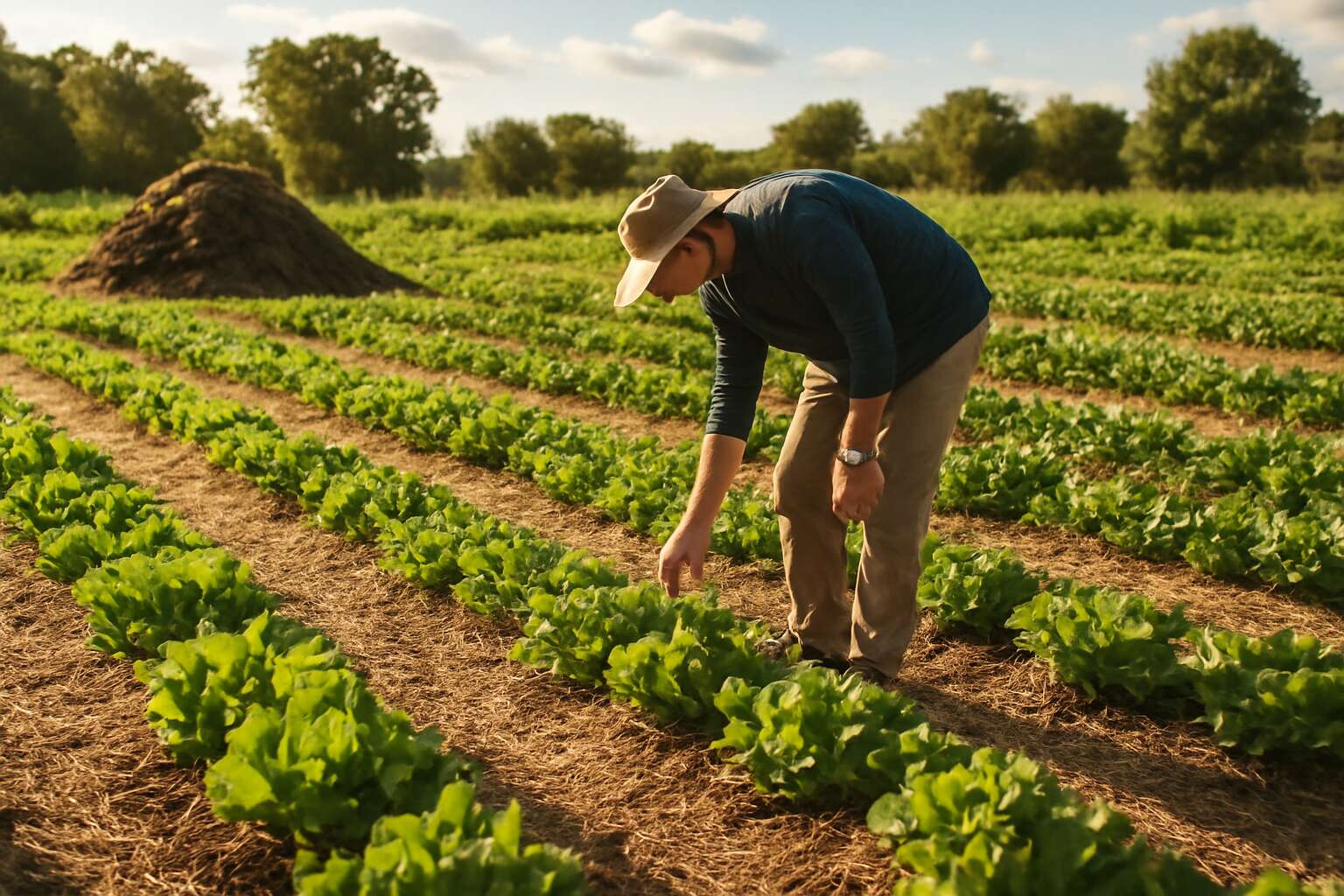
Comprehensive guide to sustainable organic farming practices
Principles of Organic Farming
In drought-prone regions of South Africa, soil moisture retention can rise by 40% when organic routines take root—proof that patience, compost, and mulch actually pay off. It’s not magic; it’s biology with a wink. Healthier soils, tastier harvests, and irrigation headaches fade a little each season.
This is a comprehensive guide to sustainable organic farming practices, exploring the Principles of Organic Farming in a South African context. It explains how organic farming can be practiced by prioritising soil life, nutrient cycling, biodiversity, and humane pest management.
Key pillars guiding the practice include:
- Soil health through compost, cover crops, and minimal disturbance
- Biodiversity and habitat for beneficials
- Water stewardship with efficient, low-energy inputs
- Natural pest management and resilient seed choices
South Africa’s farms balance ecological integrity with commercial viability, proving sustainable organic farming can be both practical and poetic.
Soil Health and Nutrient Management
On drought-prone South African soils, soil life is a quiet engine. When microbial networks wake and hum, moisture sticks longer and nutrients cycle more naturally. I’ve watched this effect in our own fields: steadier harvests, deeper flavors—proof that patience and biology pay off when rain is scarce. The field seems to whisper back.
This section explains how organic farming can be practiced by nurturing soil biology, recirculating nutrients, and welcoming a wider web of life into the fields. It favors resilience over quick fixes, letting natural processes guide each planting cycle toward balance.
- Soil organic matter as life
- Microbial nutrient cycling
- Habitat for soil fauna
Voices from the veld remind me that soil stewardship is a story you live, season after season.
Pest, Disease, and Weed Management
Across South Africa’s drought-prone fields, pests and weeds chase moisture and yield. Yet a living soil and a diverse canopy offer steadfast answers. This is how organic farming can be practiced—where soil biology and plant community play together, not against each other.
To steer pest, disease, and weed dynamics, we lean on patient observation, habitat creation, and balance. Diversified planting and cover crops weave a living tapestry that supports natural enemies and dampens disease risk—turning the veld into a partner, not a battleground.
Key pillars include:
- Diverse planting and cover crops
- Mulch and soil cover to suppress weeds
- Habitat for beneficial insects and birds
In field practice, the quiet work of soil life recycles nutrients and tempers stress; harvests become steadier, flavors deeper, and resilience grows as rainfall remains scarce.
Voices from the veld remind us that sustainable farming is a living story—season after season, a local legacy of care and patience.
Water Management and Irrigation
In drought-prone South Africa, every drop counts—efficiency in irrigation can trim water use by up to a third while preserving yields. This is how organic farming can be practiced in water-scarce landscapes. I’ve seen fields respond when soil stays moist and a calm irrigation schedule aligns with the season.
Water management anchors organic farming in the veld: soil organic matter holds moisture, mulch blankets the surface, and rainwater harvesting backs drought periods.
- Drip irrigation with soil moisture monitoring
- Mulch and surface cover to reduce evaporation
- Rainwater harvesting and on-farm storage
With these practices, farmers balance ecology and productivity; the land teaches patience as rainfall becomes a partner rather than a threat, and flavor deepens with steadier moisture across seasons. We learn to read the field, not command it!
Certification, Scaling, and Market Considerations
In South Africa’s wind-swept plains, the market whispers in green ink: trusted organic labels unlock long-term resilience. A seasoned grower murmurs that the soil keeps score and certification acts as the quiet ledger between field and table. This is the doorway where certification, scaling, and market vision converge to shield flavour and livelihoods from fickle seasons.
Certification, Scaling, and Market considerations form the triad that anchors sustainable practice. Here are the touchstones that keep the drama honest:
- Certification: third-party audits, clear record-keeping, and national standards that reassure buyers.
- Scaling: farmer co-ops, shared processing, and planning that preserves soil life while expanding reach.
- Market considerations: direct-to-consumer channels, restaurants, and export readiness with transparent labeling.
In the end, the craft is a patient negotiation with time, a dance of policy and commerce that keeps the flame alive without sacrificing the field. This is how organic farming can be practiced.

0 Comments