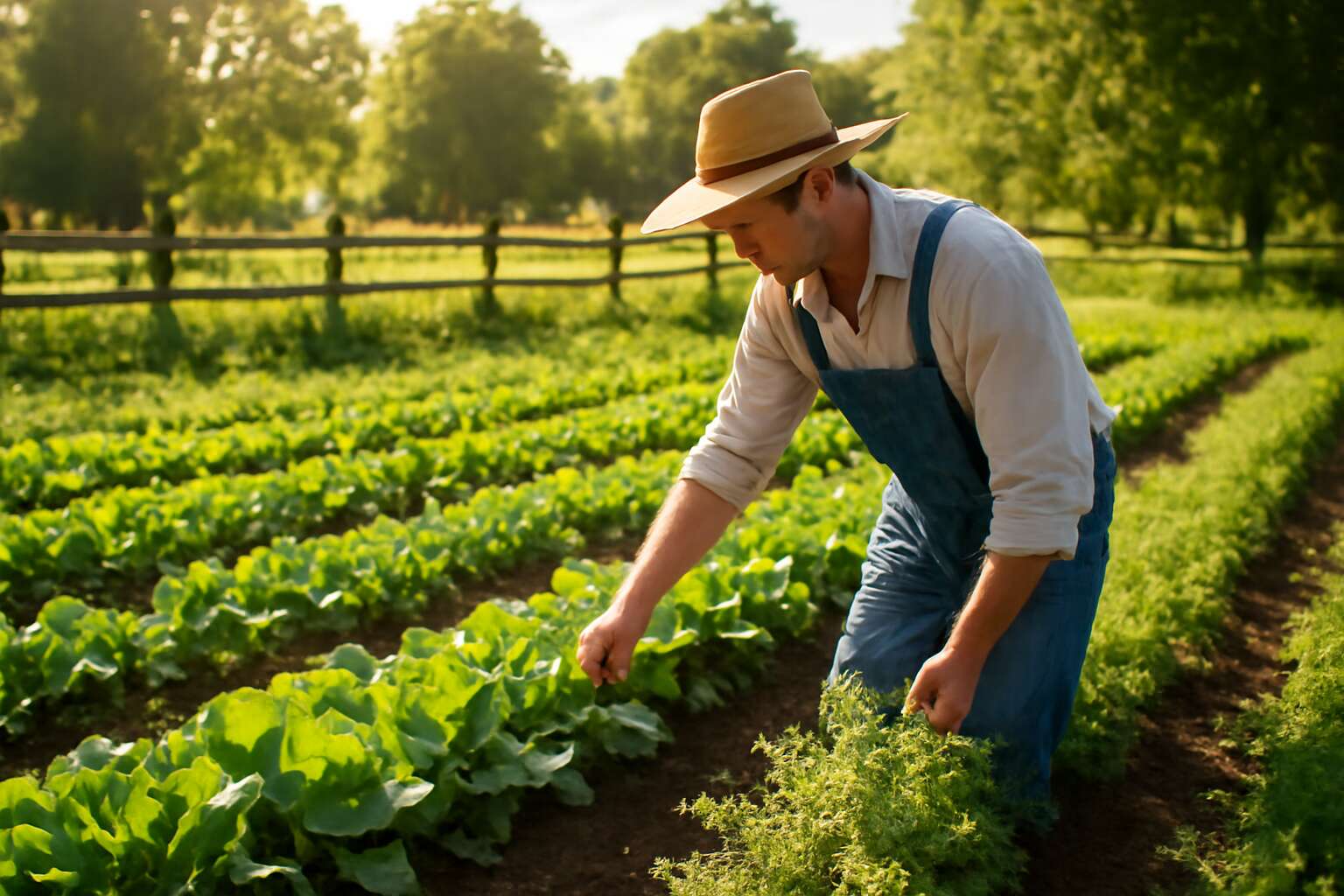
Origins of organic farming and its pioneers
Early agricultural practices that influenced organic farming
Across South Africa’s wide, weathered landscapes, soil health determines harvest resilience. A thriving organic approach relies on living cycles rather than heavy inputs. In discussions about who is father of organic farming, Albert Howard is often named, yet the story spans continents and centuries.
Origins stretch from ancient soil wisdom to modern pioneers. Albert Howard studied Indian soils, Lady Eve Balfour documented soil fertility, and Lord Northbourne coined the term organic farming, shaping a global philosophy. In the United States, J. I. Rodale popularized the movement, translating theory into garden-ready practice!
Early agricultural practices that influenced organic farming share a common surety: stewardship of soil, not just yield. These traditions echo in today’s methods:
- Crop rotation to break pest cycles
- Composting and manure management
- Green manures and cover crops
- Biological pest control and beneficial insects
Across SA, these roots still inform resilient farming.
Rudimentary methods used before modern organic standards
Across continents and centuries, soil is the quiet protagonist of a farming ethos that honors life beneath the surface. The question of who is father of organic farming threads Indian soils, English fields, and American gardens into a single, living narrative.
From Albert Howard to Lady Eve Balfour and Lord Northbourne, the early pioneers forged a global vocabulary before the term organic farming existed.
- Albert Howard
- Lady Eve Balfour
- Lord Northbourne
- J. I. Rodale
Their early choices—stewardship of soil, patience, and living cycles—were not a polished doctrine but the living roots of a movement that still hums through South Africa’s fields.
Influential agricultural texts and thinkers shaping organic principles
Origins of organic farming emerged from practical care for soil as the living engine of harvests. Across climates and centuries, farmers practiced soil-first methods long before a label existed. The question who is father of organic farming threads Indian soils, English fields, and American gardens into a single, living narrative. Think of Albert Howard and Lady Eve Balfour as early ambassadors who treated soil as a partner, not a commodity. In South Africa, similar reverence for soil still guides sustainable farming and compost culture. It’s alive and it rewards patience!
Influential texts and thinkers shaped the principles that keep organic farming alive: soil as a living system, cycles of nutrient return, and patience. The following works are touchstones for researchers and farmers alike:
- The Soil and Health — Albert Howard
- The Living Soil — Lady Eve Balfour
- Look to the Land — Lord Northbourne
- Organic Gardening and Farming — J. I. Rodale
Transition from conventional to organic farming in historical contexts
The soil is the living engine of harvests, a truth that has guided farmers across South Africa and beyond for generations. Origins of organic farming grew from patient, soil-first care—a dialogue with earth that flourished long before any label existed. In dusty plains and fertile river valleys, practical composting and microbial life became a quiet revolution, turning patience into steady, resilient harvests.
So, who is father of organic farming? The answer is a chorus of farmers and thinkers, not a single name. Across continents, from Indian soils to English fields, to American gardens, the movement gathered steam as South Africans kept the faith in living soils and compost culture.
Identifying the father figure in organic farming history
Candidates and claims to the father title in different regions
The question who is father of organic farming still threads through history like a seed, taking root in many soils. In South Africa, soil and sun tell stories of lineage that refuses a single throne, inviting a chorus of voices from Britain, Germany, and the United States to claim the title.
Identifying the father figure across regions reveals a tapestry rather than a crown. The contenders—
- Albert Howard — Britain and India; celebrated as the father figure of modern organic farming for transplanting soil-first practices into a global doctrine.
- J. I. Rodale — United States; propelled the movement with relentless publishing and the aspirational idea of farming that feeds both body and planet.
This regional chorus reminds readers that the journey from soil to system is collective, not singular!
Impact of key figures on organic farming methods
Across South African fields, the soil keeps score, and its favorite refrain is a chorus of pioneers. The question, who is father of organic farming, travels like wind through the kraal and the classroom, turning simple plows into a movement.
Across regions, the father figure emerges as a tapestry rather than a throne. Consider these pillars:
- Albert Howard — Britain and India; celebrated for transplanting soil-first practices into a global doctrine.
- J. I. Rodale — United States; propelled the movement with publishing and the aspirational idea of farming that feeds both body and planet.
These figures changed methods: compost, cover crops, biological pest management, and soil-friendly rotations. The South African soil answers with patience, reward, and a stubborn refusal to shortcut the living system.
Critiques and defenses of the father figure concept
Across South African fields, a stubborn question travels through classroom chalk and farm dust: ‘who is father of organic farming?’ The answer is a tapestry, not a throne, woven from soil-first wisdom and regional ingenuity.
Critiques and defenses circle the title like wind around a kraal. Consider these reflections:
- Critique: the father figure can flatten diverse regional innovations into a single origin story.
- Defense: it helps trace a lineage that shaped global practices and policy conversations.
- Defense: the label invites cross-cultural dialogue, reminding farmers that soil health is a shared inheritance.
Ultimately, the term serves as a lens rather than a law, guiding readers toward a history where compost, cover crops, and rotations mingle with culture and policy. South African soil nods with patience, nuance, and resolve.
How media and culture shaped the narrative
“History has a way of smelling like damp earth and old secrets.” In the South African fields and beyond, the question who is father of organic farming persists, a murmur that travels from classroom chalk to wind-blown furrows. It anchors a search, not a proclamation.
Media and culture have braided the tale into a navigable map. They turned soil-first practice into a public saga, shaping memory and policy. Three channels have carved the portrait.
- Documentaries that cast soil as a living archive
- Biographies and farmer memoirs that anchor regional voices
- Policy debates and certifications that tie practice to legitimacy
Yet the true father remains a chorus, not a crown. Identifying him is less about a single name and more about tracing a lineage of curiosity and caution—soil, season, and story muttering together in a shared inheritance.
Comparative views on organic father figures across eras
“Soil remembers,” a South African farmer murmurs, and the guiding question—who is father of organic farming—feels charged on our wind-swept plains. This search isn’t for a single name, but for a lineage of curiosity that keeps ideas alive.
Across eras, three portraits emerge: a soil-first experimentalist, a policy-minded reformer who mapped legitimacy, and a field memoirist who voices regional wisdom. Each era adds a cadence to the chorus, shaping practice in South Africa and beyond.
- The soil-first experimentalist who trusted living soil to drive sustainability
- The policy-forward reformer who linked certification, standards, and market access
- The regional memoirist who preserves local nuance and farmer wisdom
In the end, the father figure is less a crown than a chorus—multiple voices traveling from dusty furrows to urban boardrooms, inviting readers to listen closely to the land.
Core principles and practices of organic farming
Soil health and natural fertility management
From the veld to the boardroom, the core principles of organic farming hinge on soil that breathes. “Soil is a living memory,” I whisper to the team, and when fertility is tended with patient, natural methods, harvests answer with a quiet, stubborn vitality. In South Africa’s diverse climates, soil health and natural fertility management become a pact with the land: compost, mulch, and living roots feed the microbiome rather than drain it.
- Compost and on-farm organic amendments
- Crop rotation and biodiversity
- Cover crops and mulching for soil cover
- Biological pest and disease balance
The question who is father of organic farming has many voices, and the lineage is a tapestry rather than a single name. Principles survive by listening to soil rhythms, preserving fertility, and honoring ecological balance in every hectare and homestead.
Biological pest control and biodiversity preservation
“The soil remembers,” a seasoned farmer once whispered, and in South Africa’s varied climates that memory translates into practice. The question who is father of organic farming remains a quiet echo in every hectare, a chorus of voices rather than a single name. Here, core principles hinge on thriving ecosystems, not synthetic shortcuts, and biological pest control sits at the heart of that alignment.
- Biological pest control through beneficial insects and natural enemies
- Biodiversity preservation with flowering intercrops, hedgerows, and habitat patches
- Cover crops and mulching to feed soil life and suppress pests
- Crop rotations and intercropping to disrupt pest cycles and disease pressures
This approach treats farming as a living system rather than a battlefield, where the lineage of organic thought is a tapestry of voices and places—South African soils, climates, and communities—rather than a solitary founder.
Compost, green manures, and crop rotation
In South Africa, soil carries memory like a living ledger! Yields improve when compost feeds the soil life and rotations align with seasons. The question who is father of organic farming persists as a chorus, a reminder that practice is a collective dialogue across climates and communities.
Core principles center ecosystems, with compost, green manures, and crop rotation guiding fertility.
- Compost feeds soil life and improves structure
- Green manures fix nutrients and suppress weeds
- Crop rotation disrupts pests and disease
Across SA farms, these practices yield healthier soils, better water retention, and resilient harvests. The story of organic leadership becomes a shared thread among farmers, researchers, and communities.
Organic certification standards and their implications
Across South Africa, healthy soils keep memory like a living ledger. Yields rise when compost feeds soil life and rotations honor the seasons. The query ‘who is father of organic farming’ becomes a chorus—leadership here is a dialogue among farmers, researchers, and communities!
Core principles place ecosystems at the centre, with soil life, biodiversity, and preventive care guiding every decision.
- Soil health first
- Biological pest management
- Crop diversification and green manures
Organic certification standards set the rules for inputs, handling, and record-keeping. Audits, traceability, and continual compliance protect the integrity of the label, enabling SA farmers to access premium markets and reassure consumers.
Water management and resource stewardship
In South Africa’s climate, the question “who is father of organic farming” isn’t about a single pedigree; it’s a living conversation about stewardship and resilience. The answer, if there is one, belongs to a chorus—farmers, researchers, and communities co-creating sustainable methods instead of chasing quick fixes.
Core principles place ecosystems front and center, guiding decisions that nurture soil vitality, biodiversity, and preventive care. Water management becomes a daily craft: capturing rain, reducing losses, and leveraging mulch and compost to keep fields thriving through dry spells.
In practice, water stewardship translates into concrete steps:
- Rainwater harvesting and efficient irrigation systems
- Mulching and organic amendments to boost moisture retention
- Strategic crop rotations to improve soil moisture use and pest cycles
Global development and milestones in organic farming
Regional movements and their contributions to organic farming
Global organic farming has quietly become a continental drama with serious plot twists. About 1.5% of the world’s cropland now grows without synthetic inputs, a statistic that would make any gardener dream. The question of who is father of organic farming has many faces.
- 1940s–1960s: ecological farming concepts gain traction in Europe and North America.
- 1970s–1990s: formal organic standards emerge with field trials.
- 2000s onward: global markets expand, with regional networks.
Regional movements and their contributions take different shapes. Speaking from the field, I witness networks of smallholders, organic associations, and certification bodies in South Africa fuse local wisdom with global standards. They drive soil-building practices, compost programs, and local markets—from Limpopo to Cape Town. The result is a resilient culture that prizes fertility over quick fixes.
Ultimately, the title is a chorus, not a solitary name, spoken by farmers and communities who keep soil alive.
Policy frameworks and certification programs worldwide
Policy milestones have hardened into the backbone of organic farming. Across continents, regulators stitched rules that defend soil health and transparent sourcing. The question of who is father of organic farming has evolved from myth to mosaic, as standards multiply and converge. In Europe, North America, and Asia, oversight emerged through collaborative bodies, trials, and evolving labels that quietly steer everyday decisions on the ground.
- USDA Organic (NOP) standards and traceability
- EU Organic Regulation and the EU organic logo
- Japan’s JAS system
- India’s NPOP and allied certification networks
For researchers and practitioners in South Africa, global milestones translate into local pathways via IFOAM Organics SA and regional certification bodies, translating policy into practical assurance for farms—from Limpopo to Cape Town. The result is a growing market that prizes transparency, biodiversity, and long-term fertility over quick fixes.
Key milestones and turning points in organic farming history
Global organic farming now spans over 75 million hectares, reshaping soils, flavors, and markets. Among these debates, who is father of organic farming has evolved from a single name to a mosaic of voices—scientists, farmers, policymakers, and communities whose experiments stitched living soils into durable systems! Across continents, policy milestones hardened into practical rules that guide daily decisions in the field.
- EU Organic Regulation and the EU organic logo, a widely recognized standard for farmers and consumers
- USDA Organic (NOP) standards and traceability, building trust from farm to plate
- Japan’s JAS system, aligning production with consumer expectations
- India’s NPOP and allied certification networks, expanding access and legitimacy
As global trade grows, these milestones find local expression in South Africa through IFOAM Organics SA and regional bodies, turning policy into practical assurance for farms—from Limpopo to Cape Town. The story weaves soil health, biodiversity, and long-term fertility into every harvest.
Economic and social impacts of organic farming adoption
Global farming networks have woven organic milestones into every corner of the map, turning humble compost into serious commerce. The question who is father of organic farming has evolved from a single name into a mosaic of scientists, farmers, policymakers, and communities.
Economic and social impacts ripple far beyond yields. Adoption lifts income stability, opens niche markets, and expands local jobs across certification, farming, and supply chains.
- Rural incomes rise as premium prices take root
- Smaller farms gain market access through transparent traceability
- Community biodiversity and resilient systems get stronger
Around South Africa, the story threads through IFOAM Organics SA and local cooperatives, turning policy into practical assurance—from Limpopo to Cape Town—where soil health and long-term fertility frame every harvest—yes, the soil has opinions.
Sustainable farming innovations linked to organic practice
Global farming networks have stitched organic milestones into every corner of the map, turning soil into strategy and compost into commerce. The question who is father of organic farming has evolved from a single name into a mosaic of scientists, farmers, policymakers, and communities. Across continents, standards weave soil health, biodiversity, and fair-trade principles into everyday practice. In South Africa, IFOAM Organics SA translates these milestones into local assurance—from Limpopo to Cape Town.
Key milestones that keep sustainable practice advancing include:
- Digital traceability linking farm inputs to final products
- Regional networks harmonizing standards while honoring local climate and soil
- Certification programs that measure soil vitality, biodiversity, and resource stewardship
In South Africa, these innovations are not abstract; they shape access to niche markets, support community resilience, and anchor long-term fertility in local practice.
Debunking myths and understanding the legacy
Common misconceptions about organic farming origins
Across South Africa’s varied landscapes, myths about organic farming persist. In lively debates about who is father of organic farming, people expect a single hero rather than a centuries-long conversation. The legacy is stitched from traditional soil care, patient crop rotation, and a stubborn respect for living systems.
Common misconceptions deserve a closer look. Here are a few that still float around:
- That organic farming means no yields or profits.
- That it relies on mysticism rather than science.
- That its origins are purely modern, ignoring long-standing communal practices.
Understanding the legacy means recognizing that the father figure is not a sole proprietor of wisdom. Indigenous knowledge, regional reformers, and policy shifts across South Africa all share responsibility for the organic idea today.
How modern organic farming blends traditional wisdom with science
In South Africa, 58% of urban shoppers now seek organic produce, a telling heartbeat beneath the debate about farming’s guardians. Debunking myths begins with soil and science, where patient hands and the weathered wisdom of the veld outwait any mystic tale. The legacy breathes in living systems.
So, who is father of organic farming? The answer is a chorus, not a solitary maestro. Indigenous practices, regional reformers, and policy shifts all share the mantle, shaping a tradition that thrives where experience brushes against empirical study.
Debunking myths also honours the legacy: a craft of soil health, biodiversity, and stewardship that travels from ancestral fields to modern laboratories. The father figure isn’t one person but a lineage that weaves tradition with science to sustain South Africa’s soils.
Public perception and media representation of organic pioneers
So, who is father of organic farming? The answer isn’t a solitary maestro but a chorus—Indigenous practices, regional reformers, and policy shifts weaving a living tradition. In South Africa, 58% of urban shoppers now seek organic produce, a pulse that keeps the debate honest and pushes soil science to the fore. Debunking myths begins with the soil and the stories we tell about it.
Public perception and media representation of organic pioneers often reduce a vast lineage to a single poster child, which sells but misleads. Debunking myths honours a legacy built on soil health, biodiversity, and stewardship—shared by farmers, researchers, and activists alike.
- Myth: a lone savior figure
- Myth: only farmers matter
- Myth: organic farming began in one place
The truth is a distributed heritage that travels from ancestral fields to modern laboratories, grounding the idea of who is father of organic farming as a collective mantle.
Future directions and unresolved questions in organic farming
In South Africa, 58% of urban shoppers now seek organic produce, a signal that the father figure of organic farming can’t be reduced to a single name. Public perception often trademarks the father figure to a solo hero; yet the truth is a chorus—Indigenous practices, regional reformers, and policy shifts weaving a living tradition. Debunking myths about origins reveals a distributed mantle, not a lone hero. The question who is father of organic farming remains a collaborative thread in this evolving story.
Understanding the legacy means tracing threads from ancestral fields to modern labs. The narrative becomes clearer when myths are dispelled: a lone savior, only farmers, or one place. The father figure becomes a shared inheritance—one that invites researchers, activists, and farmers to participate! As for future directions, questions linger about scaling, certification, and equitable access to knowledge.

0 Comments